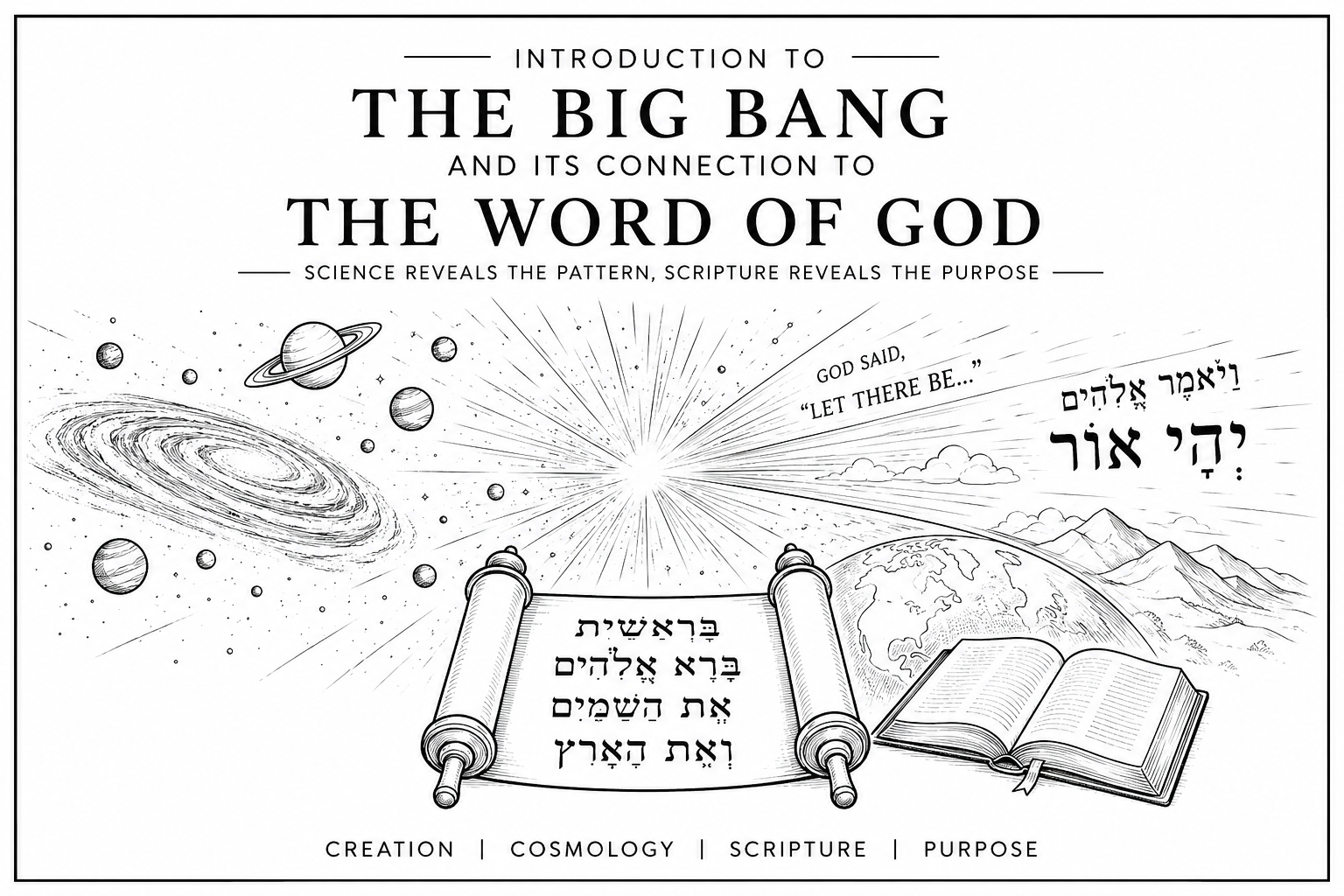
The Big Bang describes the universe emerging from an extremely hot, dense state and expanding into the cosmos we see today. Genesis similarly begins with darkness, light, separation, and the ordering of creation.
While Scripture speaks through sacred narrative and science through physics, their shared themes invite us to explore the convergence of cosmic origins, light, and order.
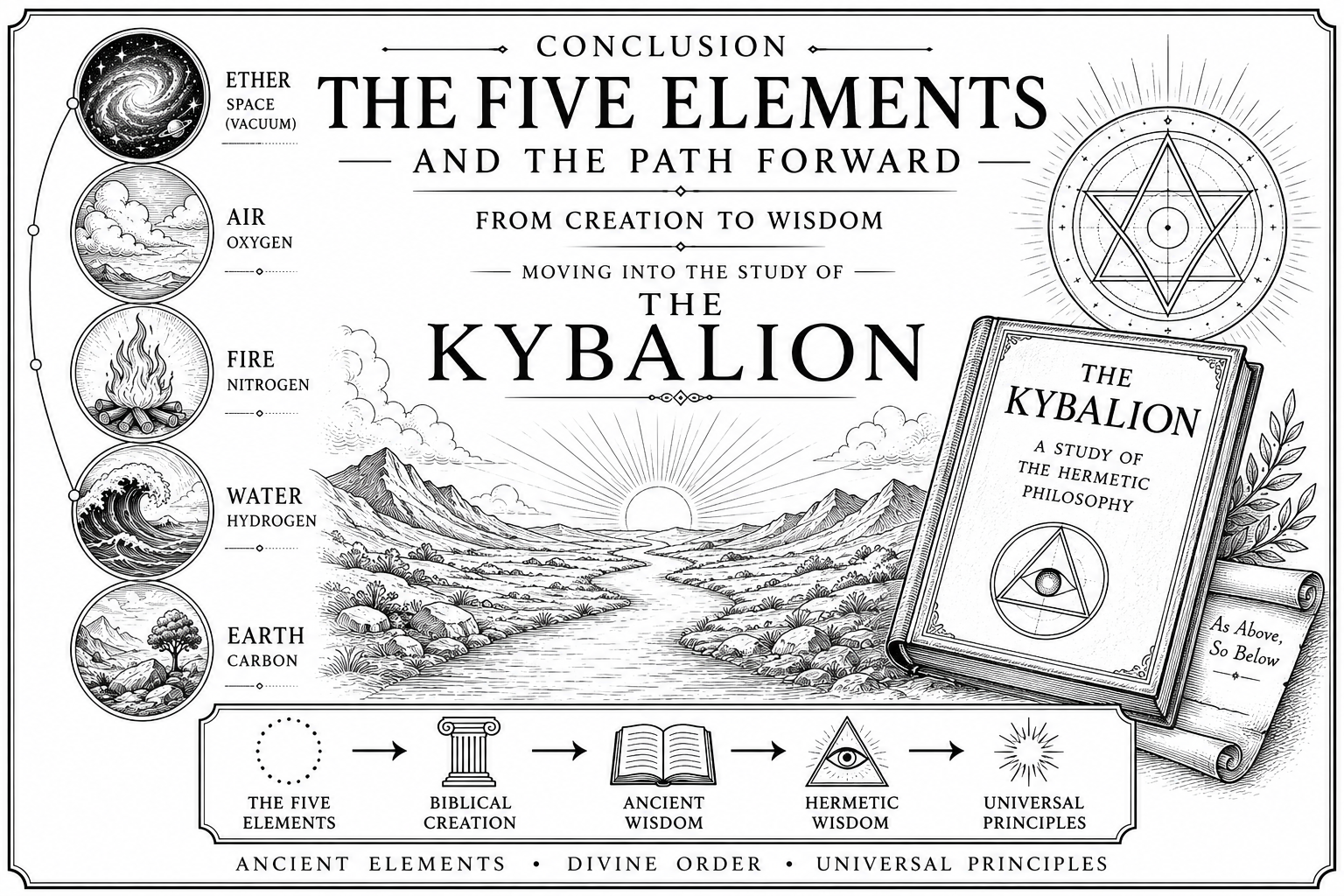
Having examined Ether, Air, Fire, Water, and Earth, we now bring these elemental correspondences together as a unified framework for understanding creation. From here, we transition into a study of The Kybalion, examining its principles and asking how its Hermetic understanding of reality compares—and contrasts—with the biblical vision of creation, order, and divine wisdom.
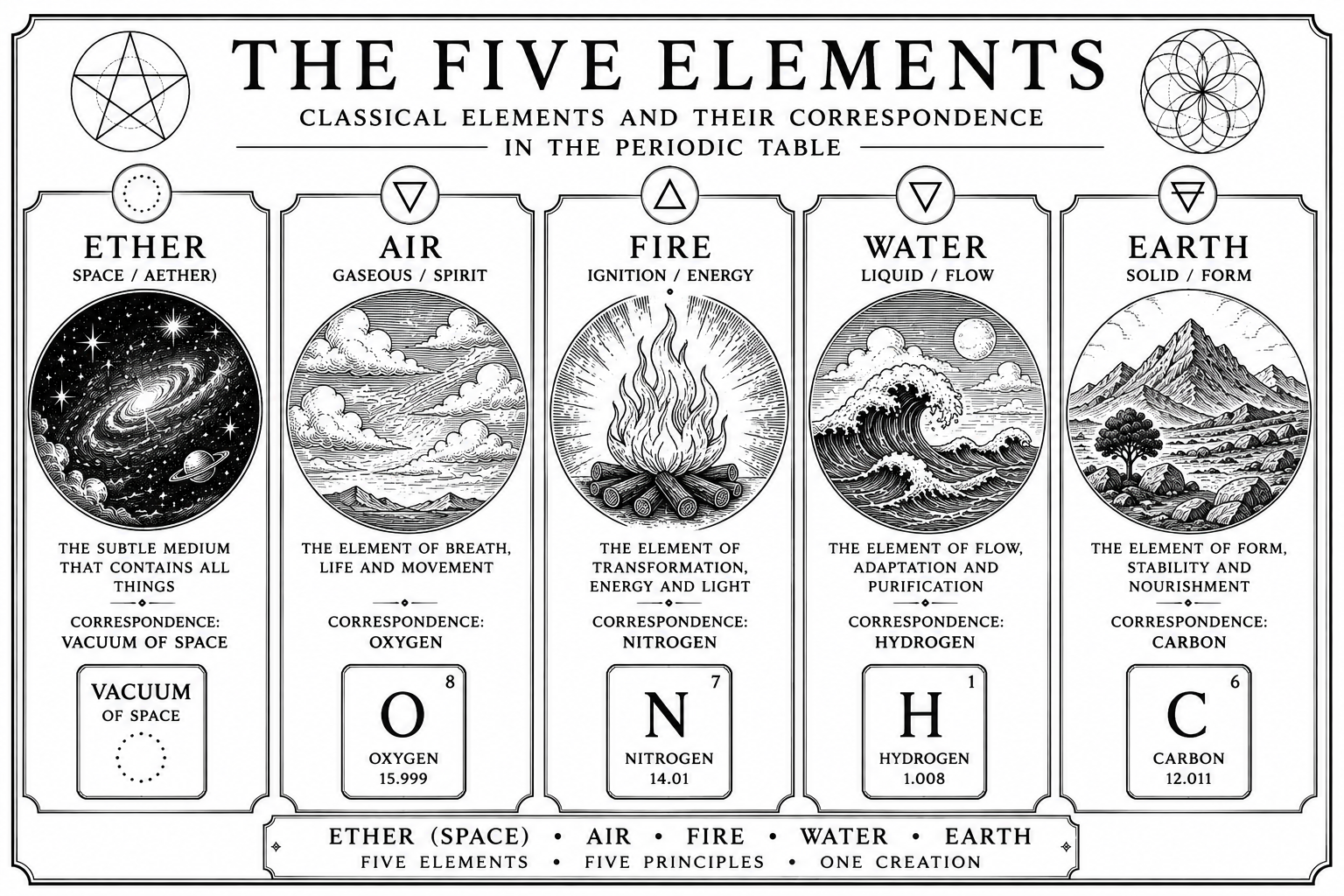
An introduction to the ancient concept of the five elements—Ether, Air, Fire, Water, and Earth—and their role in understanding the structure and order of creation. We explore how these classical elements can be compared symbolically with the material world and used as a framework for reading the Genesis creation narrative.
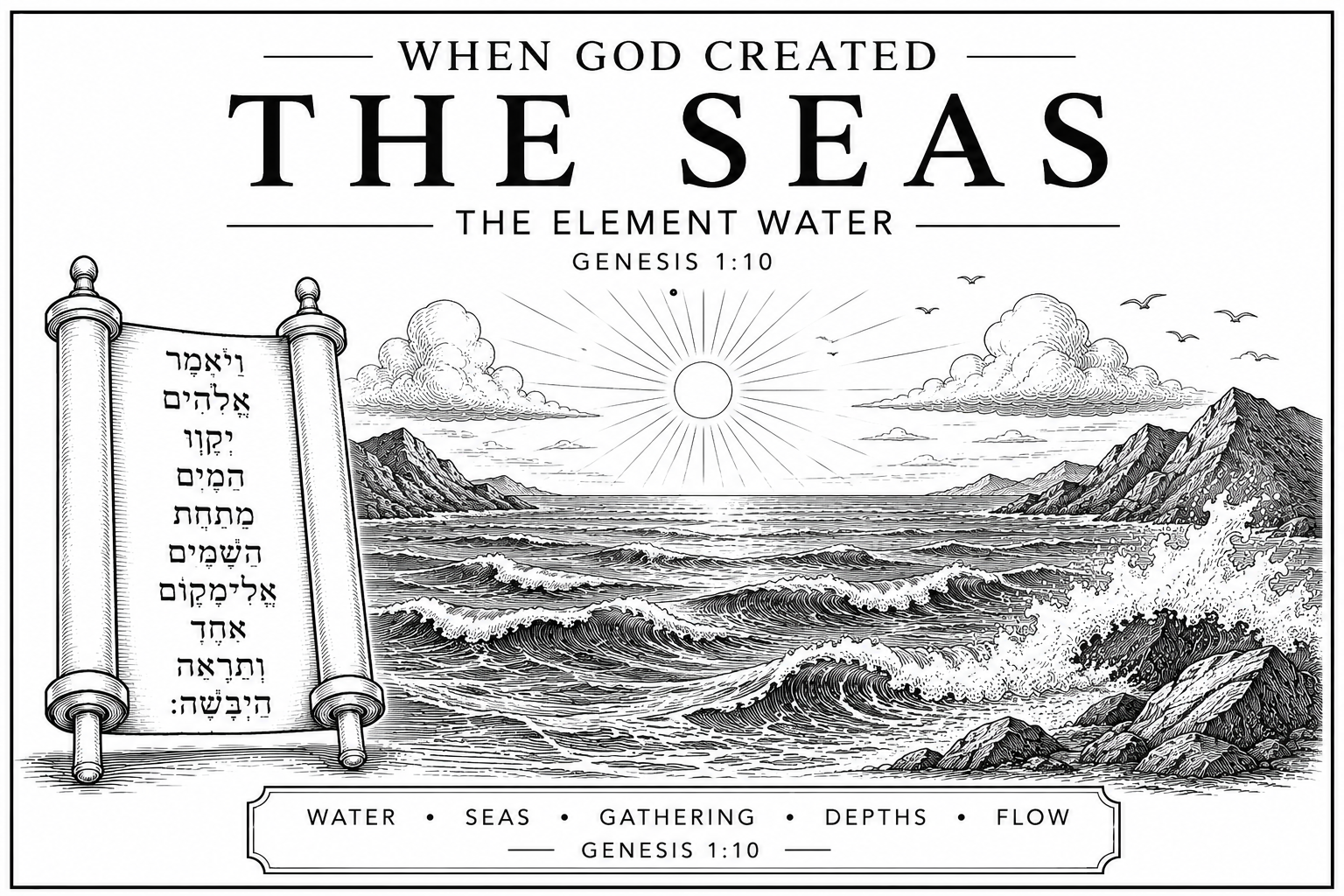
Water represents flow, depth, purification, and the movement of life. Beginning with God’s gathering of the seas in Genesis, we examine water as a foundational element of creation and explore its correspondence with hydrogen, the simplest and most abundant element in the universe.
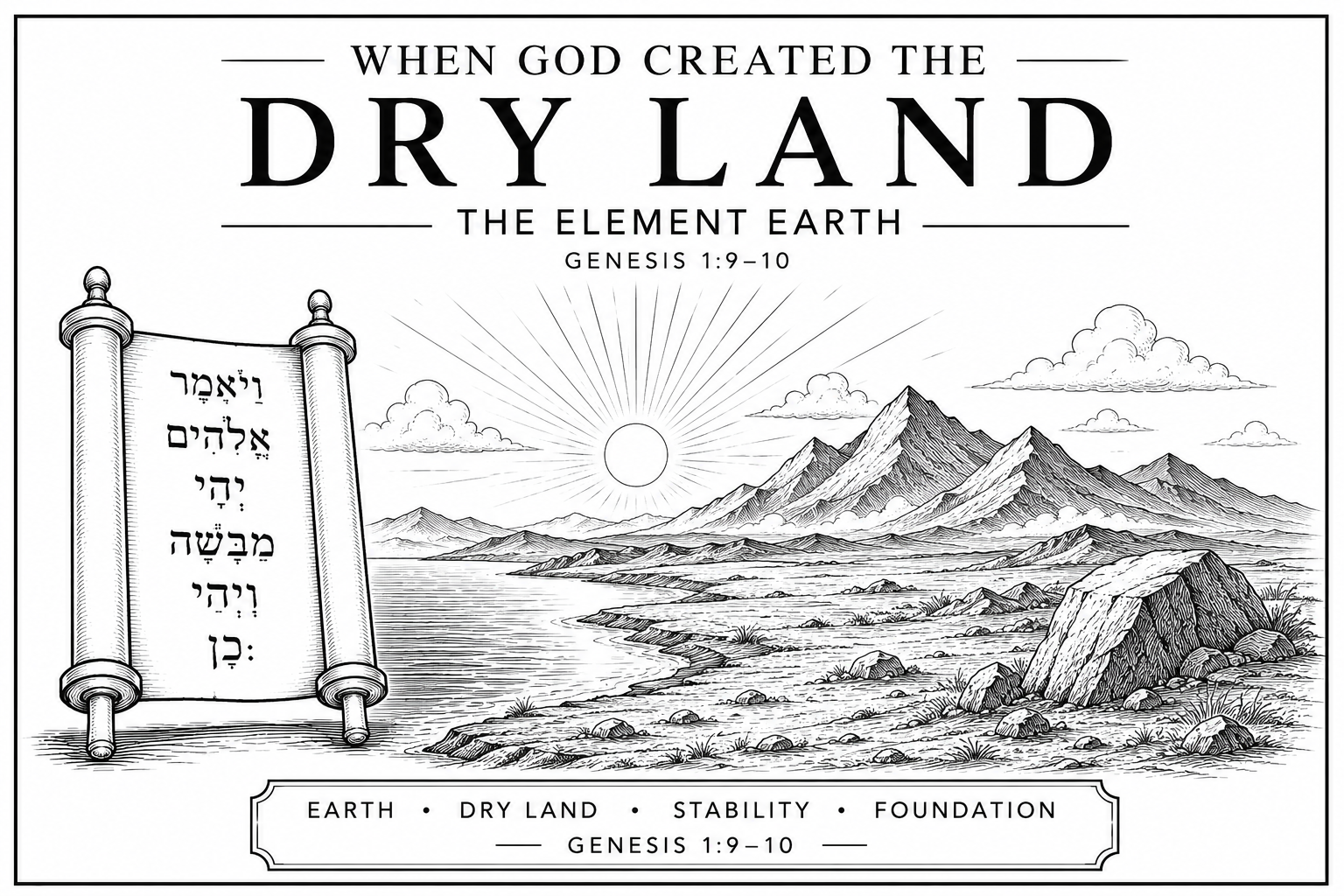
Earth represents form, stability, foundation, and nourishment. We explore the biblical emergence of dry land and its relationship to the element Earth, while considering carbon as a fundamental building block of the physical structures of life.
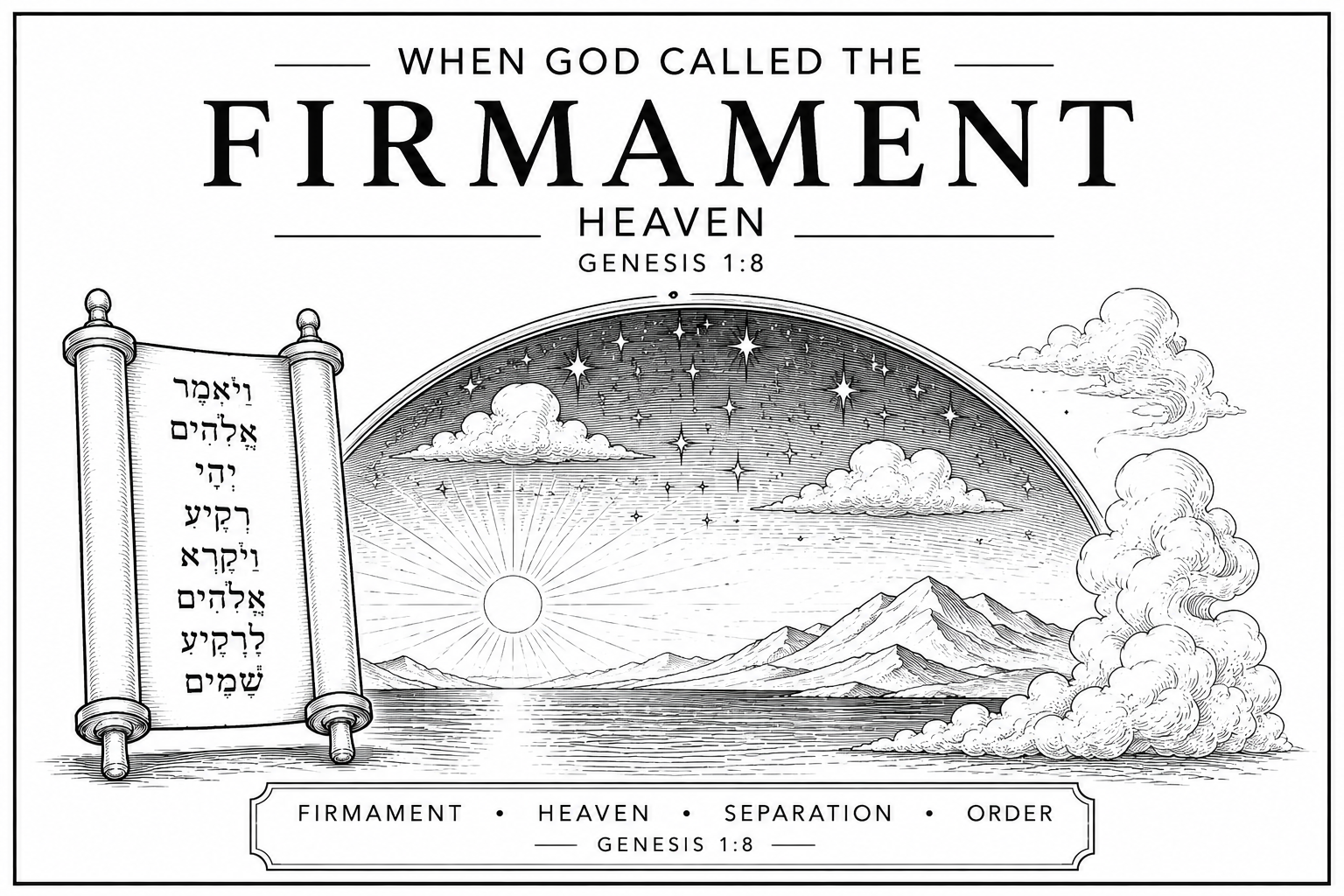
Air represents breath, movement, and life. Through the Genesis account and the symbolism of breath, we explore Air in relation to oxygen and consider how this element participates in sustaining the living creation.
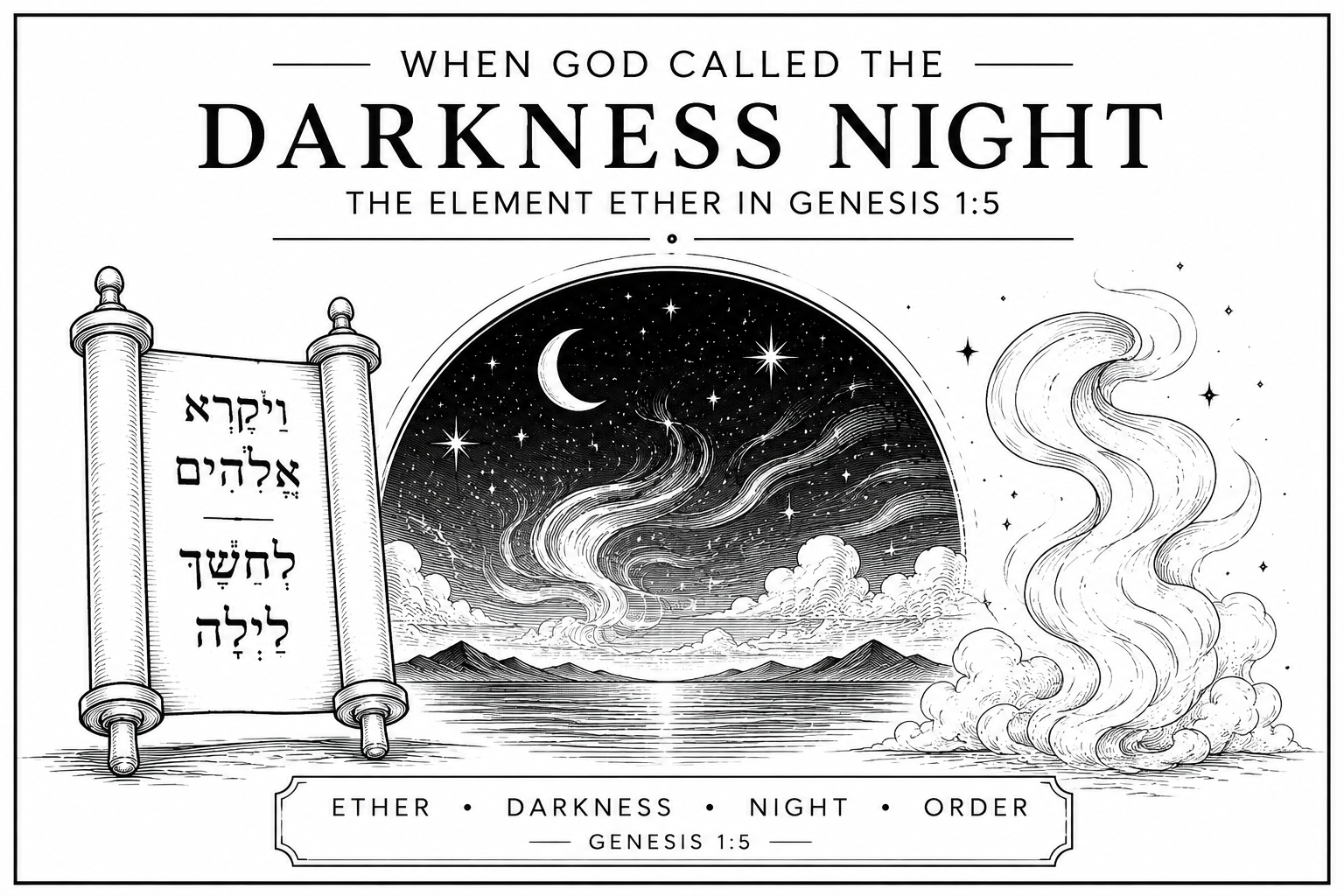
Ether represents the subtle realm of space—the medium or expanse in which creation unfolds. In this lesson, we consider the relationship between Ether, the heavens, and the vacuum of space, exploring how the concept of an invisible medium has shaped ancient cosmological thought.
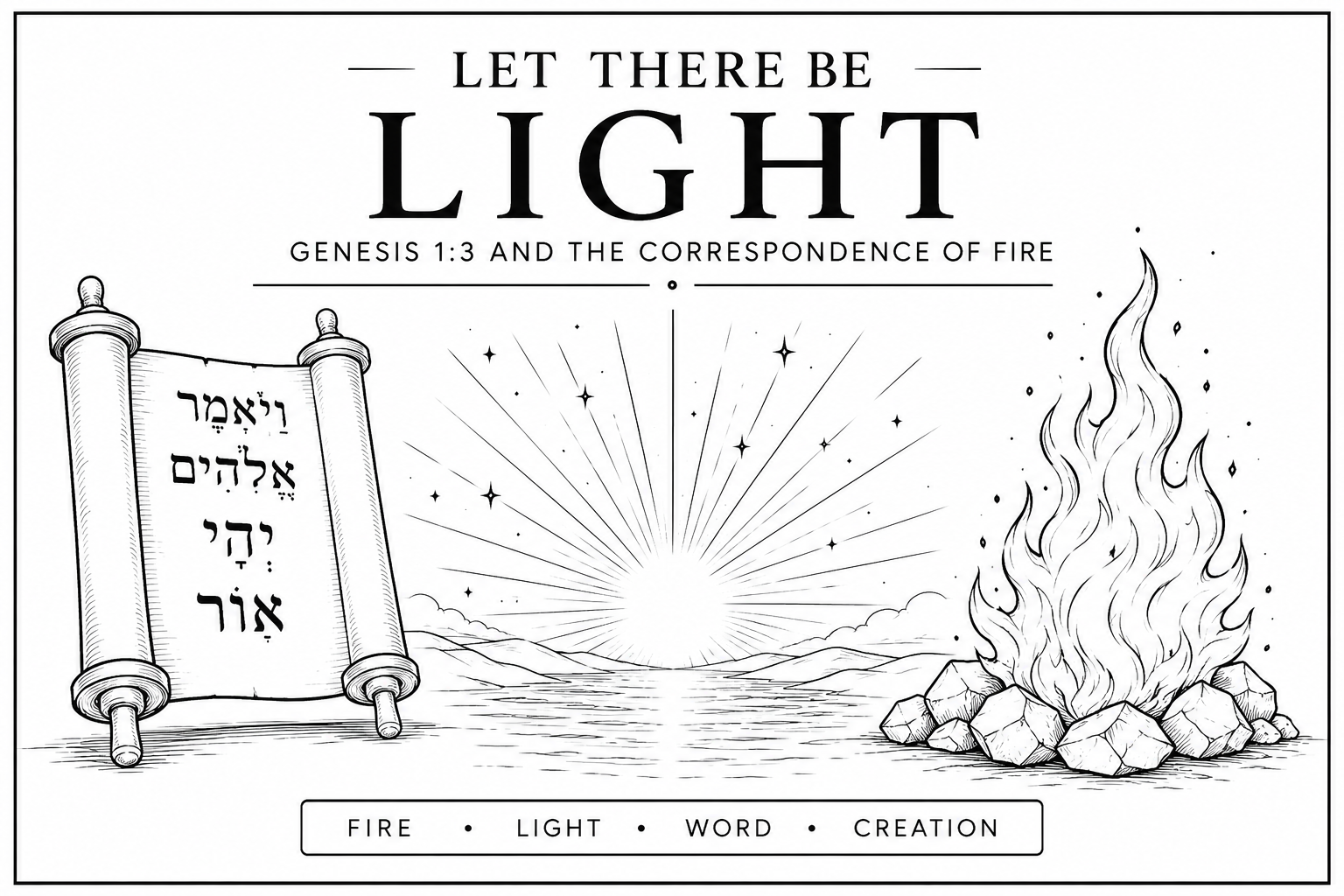
Fire represents energy, transformation, illumination, and purification. This lesson examines the symbolism of fire within the biblical creation narrative while exploring its proposed correspondence with nitrogen and the broader principle of transformation within the created order.
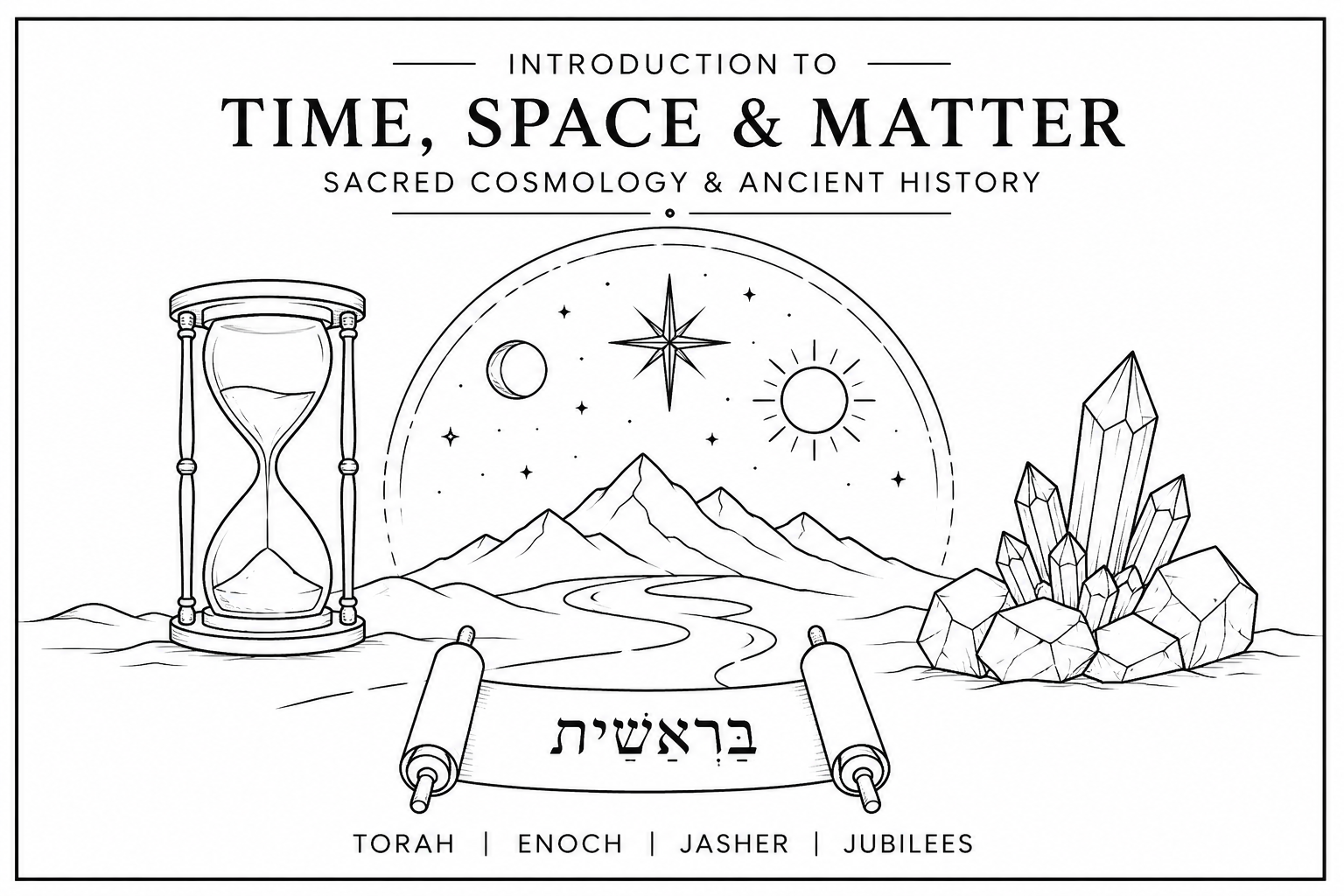
Journey to the beginning of creation and explore the biblical foundations of time, space, and matter. This introductory lesson examines Genesis 1:1 and reveals how the opening words of Scripture provide the framework for understanding creation, God’s order, and the person of Christ.